Compliance Risk Management: Effective Strategies for Businesses
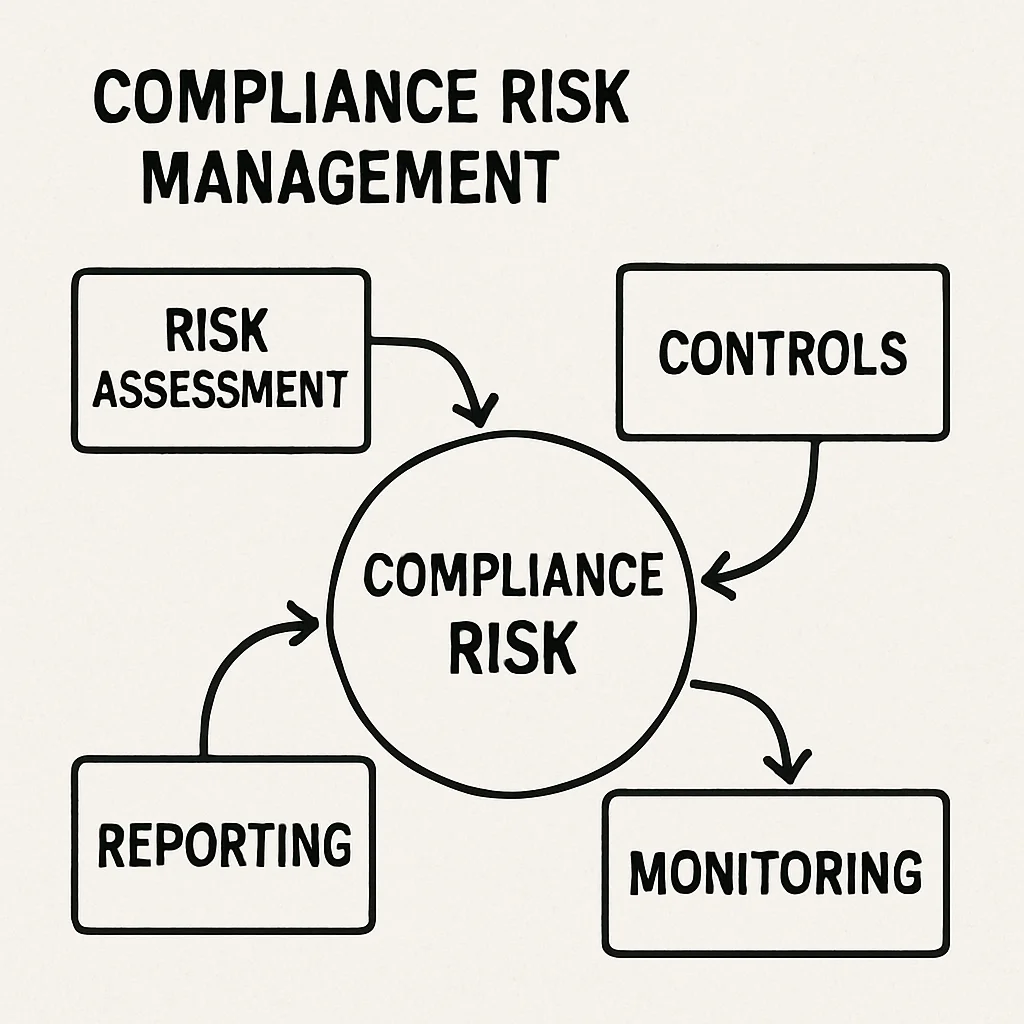
 Compliance risk management is crucial for any organization. It involves identifying and mitigating risks that could lead to non-compliance with laws and regulations.
Effective compliance risk management protects organizations from legal penalties and financial losses. It also safeguards their reputation.
A comprehensive risk assessment is the foundation of a successful compliance strategy. Regular updates are essential as regulations and business environments change.
Implementing strong internal controls and training employees on compliance policies are key steps. These measures foster a culture of compliance within the organization.
Technology can also play a significant role. It automates compliance processes and improves efficiency, making compliance risk management more effective.
Key Takeaways
• Compliance risk management helps organizations identify and reduce regulatory risks.
• Regular risk assessments improve decision-making.
• Strong internal controls support regulatory compliance.
• Employee training strengthens an organization’s compliance culture.
• Continuous monitoring helps detect compliance issues early.
Understanding Compliance Risk Management
Compliance risk management is about identifying, assessing, and addressing risks that could result in non-compliance. It’s a vital part of any organization’s broader risk management strategy.
Non-compliance can lead to severe consequences such as legal fines, business disruptions, or reputational harm. Thus, understanding the nature and scope of compliance risks is imperative for any organization aiming to operate within legal parameters.
Here are the core components of compliance risk management:
- Risk Identification: Recognizing potential areas where compliance might be breached.
- Risk Assessment: Evaluating the likelihood and impact of these risks.
- Risk Mitigation: Implementing strategies to minimize or manage these risks.
Compliance risk management ensures that businesses not only adhere to laws but also align with industry best practices. It helps build a resilient framework, safeguarding the company against unforeseen challenges. By integrating compliance risk management into everyday operations, organizations promote a culture of accountability and due diligence. This approach fosters trust and long-term sustainability.
The Importance of Compliance Risk Management
Compliance risk management plays a crucial role in safeguarding organizations from potential legal and financial setbacks. By proactively managing compliance risks, companies can avoid costly penalties and strengthen their market position.
Having robust compliance risk management can protect a company’s reputation and foster stakeholder trust. In today’s digital age, reputational damage can spread rapidly, making prevention measures even more critical.
Key benefits of an effective compliance risk management include:
- Legal Protection: Reduces chances of regulatory violations.
- Financial Security: Prevents losses due to fines or penalties.
- Reputation Management: Enhances stakeholder confidence.
Beyond avoiding negative outcomes, a well-implemented compliance risk management program can also unlock competitive advantages. Organizations can improve operational efficiencies and adapt swiftly to regulatory changes. By embedding compliance into strategic planning, businesses not only meet legal obligations but also achieve sustainable growth, reinforcing their commitment to ethical conduct.
Key Elements of a Compliance Risk Management Program
A successful compliance risk management program relies on several core elements. These components ensure an organization stays aligned with regulatory expectations while maintaining internal coherence.
Firstly, a comprehensive risk assessment is essential. It involves identifying potential compliance risks, analyzing their impact, and prioritizing them based on severity. This step lays the groundwork for all further actions.
After assessment, developing internal controls is critical. These controls serve as safeguards against identified risks, providing a structured approach to enforcement and monitoring. Training and communication reinforce these controls, fostering a culture of compliance organization-wide.
Key elements include:
- Risk Assessment
- Internal Controls
- Training and Communication
- Ongoing Monitoring
- Regular Audits

Continuous monitoring and auditing processes help track the effectiveness of controls. This ongoing review allows organizations to adapt to regulatory changes and improve strategies over time. By integrating these elements, organizations can build a resilient compliance program that not only prevents violations but also promotes ethical business practices.
Conducting Effective Risk Assessment
Conducting a thorough risk assessment is foundational for compliance risk management. This process involves identifying, analyzing, and evaluating risks that could lead to non-compliance.
First, organizations must identify all possible risks they face. This step requires input from various departments to ensure comprehensive coverage. It’s crucial to consider both internal and external factors.
Once risks are identified, an analysis is performed to understand the potential impact and probability of each risk. This helps prioritize risks based on their importance and urgency.
Evaluation is the final step. Here, organizations decide how to address each risk, selecting strategies for mitigation and resource allocation. This ensures a measured approach to managing potential compliance breaches.
Steps for a risk assessment:
- Identify potential compliance risks
- Analyze impact and probability
- Evaluate and prioritize risks
- Develop mitigation strategies
Regular updates to risk assessments are necessary. This practice accounts for changes in regulations and business environments, helping organizations stay ahead of compliance challenges.
Developing and Implementing Internal Controls
Developing robust internal controls is vital for effective compliance risk management. These controls prevent, detect, and correct compliance violations within an organization.
A successful internal control system is integrated into daily operations. It includes policies, procedures, and practices designed to ensure compliance with laws and regulations. Internal controls must align with an organization’s risk tolerance and regulatory requirements.
Implementing these controls requires clear communication and collaboration across departments. Regular evaluations are crucial to ensure controls remain effective and relevant. Adjustments are needed as business landscapes and regulations change.
Key components of internal controls:
- Segregation of duties
- Authorization and approval processes
- Regular audits and evaluations
Strong internal controls not only protect against non-compliance but also enhance operational efficiencies. They create a structured environment where compliance is seamlessly integrated into business processes. A proactive approach to internal controls can mitigate risks and safeguard organizational interests.
Training, Communication, and Building a Compliance Culture
Fostering a culture of compliance starts with effective training and communication. Employees need to understand compliance rules and their roles in adhering to them. Training should be ongoing and accessible to everyone within the organization.
Clear communication is crucial for reinforcing compliance expectations and policies. Regular updates and open discussions keep employees informed about regulatory changes and internal expectations. This helps in cultivating an environment where compliance is prioritized by all staff.
A strong compliance culture requires active participation from leadership. Leaders should model compliance and demonstrate its value to the organization’s mission and vision. Building a compliance culture involves:
- Regular compliance training sessions
- Open channels for feedback and communication
- Recognition of compliance champions within the organization

An organization with a robust compliance culture minimizes risks and enhances its reputation. Employees are empowered to make ethical decisions, contributing to long-term success and sustainability.
Leveraging Technology and Data Analytics
Technology and data analytics have revolutionized compliance risk management. Automation streamlines processes, reducing the chance of human error. Data analytics provides deep insights into risk patterns and trends, enabling proactive compliance strategies.
Organizations can use software to monitor compliance in real-time and quickly address any red flags. Data analytics helps in identifying potential risks before they escalate into compliance violations. Key technological tools include:
- Automated compliance monitoring systems
- Predictive analytics for risk trend analysis
- Real-time alerts and reporting dashboards

By leveraging technology, businesses enhance their efficiency and responsiveness to regulatory changes. This proactive approach not only mitigates compliance risks but also positions the organization as a leader in their industry.
Monitoring, Auditing, and Continuous Improvement
Monitoring and auditing are critical components of a robust compliance risk management strategy. Continuous oversight helps identify weaknesses in compliance processes. Regular audits ensure adherence to regulations and internal policies.
Conduct periodic reviews to determine the effectiveness of your compliance measures. This helps organizations identify any gaps that need addressing. Use these audits to benchmark your progress against industry standards. Essential actions include:
- Scheduling regular internal audits
- Creating corrective action plans based on audit findings
- Conducting peer reviews to improve oversight
Building a culture of continuous improvement ensures that compliance evolves with the organization and external regulatory changes. Feedback loops are crucial for refining compliance strategies, enabling organizations to remain adaptable and resilient. Moreover, fostering an environment of ongoing learning and improvement helps maintain a competitive edge by effectively managing compliance risk.
Addressing Industry-Specific Compliance Risks
Every industry faces unique compliance challenges that require tailored strategies. Different sectors have varying regulations, necessitating customized approaches to compliance risk management. Understanding these specific risks is vital for developing effective mitigation plans.
Organizations must assess their industry’s regulatory landscape to address these unique challenges. Identifying industry-specific threats allows businesses to deploy targeted solutions. Key steps include:
- Consulting industry-specific compliance guidelines
- Engaging with sector-specific regulatory bodies
- Conducting specialized training for industry compliance needs
By pinpointing the unique risks within their field, organizations can create robust and adaptive compliance strategies that align with their specific operational needs and regulatory requirements.
Best Practices and Success Factors
Successful compliance risk management relies on a series of proven practices. These strategies help organizations maintain regulatory compliance while minimizing potential risks. By adopting these best practices, companies can improve their compliance efforts and safeguard their operations. This ensures everyone in the organization contributes to maintaining high standards.
As businesses evolve, so should their compliance strategies. Adapting to new challenges and embracing continuous improvement will build a resilient framework. This resilience strengthens the organization’s position.
Organizations should focus on several key factors for success, including:
- Establishing clear compliance policies
- Implementing regular compliance training
- Continuously updating compliance programs
These steps help organizations create a proactive compliance culture and ensure adherence to evolving regulations. By following these best practices, businesses can enhance their reputation, mitigate risks, and foster long-term sustainability.
Common Compliance Risk Management Mistakes
• Conducting risk assessments only once
• Failing to update compliance policies
• Inadequate employee training
• Weak internal controls
• Ignoring regulatory changes
Conclusion: Building a Resilient Compliance Risk Management Strategy
Effective compliance risk management is essential for any organization seeking stability and success. A proactive approach allows businesses to navigate complexities with confidence. By integrating compliance into their core operations, companies can safeguard against potential pitfalls.
Strong internal controls and ongoing training lay the foundation for a culture of compliance. It’s vital to foster an environment where compliance is seen as a shared responsibility. This not only protects an organization but also enhances its reputation and trustworthiness in the marketplace.
Need help reducing your business security risk?
Contact us

