OAIC Notifiable Data Breach Reporting Guide
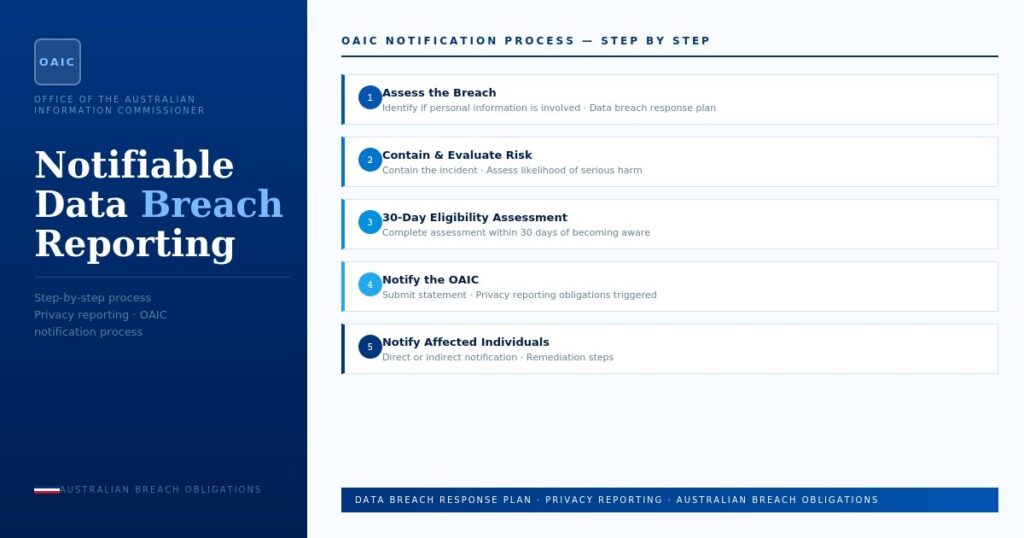
A data breach can move from a technical issue to a business crisis very quickly. One lost laptop, one compromised email account, one exposed customer file, or one ransomware incident can create legal, operational, and reputational pressure at the same time.
That is why OAIC notifiable data breach reporting matters for Australian businesses. It gives businesses a clear obligation to notify affected individuals and the Office of the Australian Information Commissioner when a data breach is likely to result in serious harm.
For business owners and managers, the key point is simple. You do not want to figure out your reporting process while the incident is already happening. You need a plan before the pressure starts.
This blog explains OAIC notifiable data breach reporting in practical business terms, including what counts as a breach, when notification may be required, what steps to take, and why secure backup and recovery planning matters.
What Is the Notifiable Data Breaches Scheme?
The Notifiable Data Breaches scheme applies to organisations and agencies covered by the Privacy Act 1988. Under the scheme, these organisations must notify affected individuals and the OAIC when a data breach is likely to result in serious harm to an individual whose personal information is involved.
A data breach can happen when personal information is:
- Accessed without authorisation
- Disclosed without authorisation
- Lost in circumstances where unauthorised access or disclosure is likely
This can include cyber attacks, accidental email mistakes, lost devices, staff errors, insider misuse, or poor access controls.
The purpose of OAIC notifiable data breach reporting is not just paperwork. It is about giving affected people a chance to reduce harm. If individuals know their information may be exposed, they can change passwords, monitor accounts, watch for scams, or take other protective steps.
What Makes a Data Breach Notifiable?
Not every data breach has to be reported to the OAIC. The key issue is whether it is an eligible data breach.
The OAIC explains that an eligible data breach occurs when a data breach is likely to result in serious harm to any individual whose personal information is involved. That assessment is made from the viewpoint of a reasonable person in the organisation’s position.
In plain language, the business needs to ask:
- What personal information was involved?
- Who could access it?
- Was the information sensitive?
- Was it encrypted or protected?
- How many people were affected?
- Could the information be used for fraud, scams, identity theft, financial harm, embarrassment, or safety risks?
- Has the risk been contained?
This assessment matters because reporting too late can increase harm, while reporting without proper assessment can create confusion.
OAIC Notifiable Data Breach Reporting at a Glance
| Area | What It Means | Practical Business Action |
| Data breach | Personal information is lost, accessed, or disclosed without authorisation | Identify what happened and what data was involved |
| Eligible data breach | The breach is likely to result in serious harm | Assess risk from a reasonable person’s viewpoint |
| Notification | Affected individuals and the OAIC may need to be notified | Prepare clear and accurate notices |
| Response plan | A documented process for handling breaches | Create and test a data breach response plan |
| Backup and recovery | Secure copies of critical data support restoration | Keep encrypted, tested backups |
| Documentation | Records of decisions and evidence | Maintain a timeline and assessment notes |
This table can help small and mid-sized businesses turn OAIC notifiable data breach reporting into a practical internal process.
Common Examples of Data Breaches
Data breaches are not always dramatic ransomware attacks. Many start with everyday mistakes.
Common examples include:
- Sending customer information to the wrong email address
- Losing a laptop, phone, or USB drive containing personal information
- A staff member accessing records they do not need
- A cyber attacker gaining access to email or cloud storage
- Ransomware affecting files that include personal information
- A database being exposed because of poor configuration
- Paper records being lost or stolen
- A supplier accidentally exposing shared business data
For Australian businesses, the lesson is clear. Data protection is not only a technical issue. It depends on people, processes, systems, vendors, and recovery planning.
The Four Key Response Steps
The OAIC’s data breach preparation and response guidance is structured around preparing for and responding to breaches, including a data breach response plan and key response steps. It explains that a quick response based on an up-to-date plan is critical to managing a breach effectively.
A practical business response can be broken into four stages.
| Step | Goal | What to Do |
| 1. Contain | Stop further exposure | Disable accounts, isolate systems, remove public access, recover lost devices where possible |
| 2. Assess | Understand the breach | Identify data involved, affected people, cause, and potential harm |
| 3. Notify | Inform required parties | Notify affected individuals and OAIC if required |
| 4. Review | Prevent repeat incidents | Fix root causes, update policies, improve controls, train staff |
This structure keeps the response organised when people are under pressure.
Step 1: Contain the Breach
The first priority is containment. The business needs to stop the breach from getting worse.
Containment actions may include:
- Disabling compromised user accounts
- Resetting passwords
- Revoking active sessions
- Removing public sharing links
- Isolating infected devices
- Blocking suspicious IP addresses
- Contacting a vendor to secure an exposed system
- Recovering a lost device if possible
- Restricting access to affected files
Containment should happen quickly, but it should still be documented. Your team should record what action was taken, who approved it, and when it happened.
This is especially important for OAIC notifiable data breach reporting because later assessment may depend on the exact timeline.
Step 2: Assess the Risk of Serious Harm
After containment begins, the business needs to assess whether the breach is likely to cause serious harm.
This is where many businesses struggle. They know something happened, but they do not know whether notification is required.
The assessment should consider:
- Type of personal information involved
- Sensitivity of the information
- Whether the information was encrypted
- Whether encryption keys were also exposed
- How long the information was accessible
- Who may have accessed it
- Whether the data could be misused
- Number of individuals affected
- Whether containment reduced the risk
- Whether the affected people are vulnerable
For example, an exposed spreadsheet with names and business email addresses may create one level of risk. A stolen file containing identity documents, health information, payroll data, or financial records creates a much higher risk.
Good assessment requires both technical and business input.
Step 3: Notify Affected Individuals and the OAIC
If the breach is an eligible data breach, the business must notify affected individuals and the OAIC.
The OAIC states that organisations should use its online Notifiable Data Breach form to notify the OAIC of a data breach.
A notification should be clear, practical, and not overly technical. It should help people understand what happened and what they can do next.
A good notification usually explains:
- What happened
- When it happened
- What information was involved
- What the business has done to contain the breach
- What affected individuals should do
- Who they can contact for more information
The goal is not to panic people. The goal is to give them useful information quickly enough to reduce harm.
Step 4: Review and Improve
After the immediate response, the business should review what happened and improve its controls.
This review should ask:
- How did the breach happen?
- Were warning signs missed?
- Did staff know who to contact?
- Was the response plan useful?
- Were backups available and protected?
- Did access controls work?
- Were cloud sharing settings too broad?
- Did notification happen smoothly?
- What needs to change?
This stage is often skipped because everyone wants to move on. But it is one of the most valuable parts of the process. A breach should lead to stronger controls, clearer processes, and better readiness.
Why a Data Breach Response Plan Matters
A data breach response plan outlines how the business will contain, assess, and manage an incident from start to finish. The OAIC specifically highlights that a quick response based on an up-to-date response plan is critical.
A practical response plan should include:
- Internal reporting process
- Response team roles
- Legal and insurance contacts
- IT support contacts
- Containment checklist
- Assessment template
- Notification approval process
- Communication templates
- Backup and recovery procedures
- Review process after the incident
For smaller businesses, the plan can be short. It just needs to be clear enough that people can use it during stress.
This is one of the most important parts of OAIC notifiable data breach reporting readiness.
Backup and Recovery in Data Breach Response
Backup and recovery planning does not replace privacy obligations, but it can reduce operational damage during an incident.
For example, if ransomware affects files containing personal information, the business may need to assess both data exposure and system recovery. Clean backups can help restore operations while the business continues breach assessment.
A strong backup plan should include:
- Regular backup schedules
- Secure cloud storage
- Encryption before data leaves the environment
- Multiple restore points
- Clear retention rules
- Access controls for backup systems
- Routine restore testing
- Written recovery priorities
This is where RedVault Systems Backup & Disaster Recovery fits into the wider breach readiness conversation. RedVault Systems provides cloud storage and Backup & Disaster Recovery, with data encrypted before it is sent to Backblaze B2 storage.
That matters because backup data may also contain personal information. If backups are not protected, they can become part of the breach risk.
Privacy and Cybersecurity Must Work Together
Many businesses treat privacy and cybersecurity as separate areas. In reality, they overlap.
Privacy focuses on how personal information is collected, used, stored, disclosed, and protected. Cybersecurity focuses on protecting systems, accounts, devices, and data from unauthorised access or disruption.
A data breach sits in the middle.
Good privacy needs good cybersecurity. Good cybersecurity needs privacy awareness.
Australian businesses should review:
- What personal information they collect
- Where it is stored
- Who can access it
- How long it is retained
- Whether it is encrypted
- Whether backups include personal information
- Which vendors can access it
- What happens if it is exposed
This practical review supports better OAIC notifiable data breach reporting because the business understands its data before something goes wrong.
Practical Checklist for Australian Businesses
Use this checklist to improve readiness.
- Create a data breach response plan
- Assign breach response roles
- Maintain updated legal, IT, and insurance contacts
- Identify where personal information is stored
- Review staff access to personal information
- Enable MFA on key systems
- Patch systems regularly
- Secure cloud sharing settings
- Encrypt sensitive data where possible
- Protect backups with strong access control
- Encrypt backup data before storage
- Test restores regularly
- Train staff to report suspicious activity
- Create notification templates
- Keep incident records and timelines
- Review the plan after each incident or drill
This checklist helps turn OAIC notifiable data breach reporting from a last-minute concern into a manageable process.
Common Mistakes to Avoid
Many businesses make avoidable mistakes during data breach preparation and response.
Common mistakes include:
- Not knowing where personal information is stored
- Waiting too long to contain the breach
- Not documenting decisions
- Assuming every breach is either harmless or catastrophic
- Forgetting that backups may contain personal information
- Leaving old staff accounts active
- Using broad cloud file sharing permissions
- Not having a notification approval process
- Failing to test backup restores
- Treating the incident as only an IT issue
The best response is planned, calm, and documented.
How RedVault Systems Supports Breach Readiness
RedVault Systems helps businesses strengthen the backup and recovery side of breach readiness.
When a data breach or ransomware incident affects systems, secure recovery becomes critical. Businesses need to restore clean data, protect backup copies, and reduce downtime.
With RedVault Systems cloud storage, data is encrypted before it is sent to Backblaze B2 storage. That encryption-first approach helps protect backup data and supports stronger recovery planning.
For Australian businesses preparing for OAIC notifiable data breach reporting, this matters because good response depends on both privacy readiness and technical recovery.
FAQs
What is OAIC notifiable data breach reporting?
OAIC notifiable data breach reporting refers to notifying the Office of the Australian Information Commissioner and affected individuals when an eligible data breach is likely to result in serious harm.
What is an eligible data breach in Australia?
An eligible data breach is a breach that is likely to result in serious harm to an individual whose personal information is involved. This requires an objective assessment based on the facts of the incident. (OAIC)
Does every data breach need to be reported to the OAIC?
No. Not every breach is notifiable. Reporting is required when the breach is an eligible data breach under the Notifiable Data Breaches scheme.
Why are backups important in data breach response?
Backups can help restore operations after ransomware, system failure, deletion, or data corruption. They should be protected and encrypted because they may also contain personal information.
How does RedVault Systems help with breach readiness?
RedVault Systems provides cloud storage and Backup & Disaster Recovery. Data is encrypted before being sent to Backblaze B2 storage, helping businesses protect backup data and prepare for recovery.
Final Thoughts
Data breaches are stressful, but a prepared business can respond with more confidence. The key is to plan before the incident happens.
Understand what personal information you hold, create a breach response plan, assign responsibilities, protect your systems, and make sure backups are secure and tested.
A strong OAIC notifiable data breach reporting process helps Australian businesses reduce harm, meet privacy obligations, and recover with less confusion.
For businesses that want stronger cloud storage and Backup & Disaster Recovery, RedVault Systems can support better resilience through encrypted data protection before storage.
Need help reducing your business security risk?
Contact us

